Roof Repair in San Jose, CA
South Bay Roofing CO stops active leaks before they rot your decking — call 510-327-8325 and we will find the source, not just the stain. Most roof repair in San Jose starts at a cracked pipe boot, a pulled step flashing, or shingles past their prime. We are licensed and insured, and we will tell you honestly whether a repair will hold or whether you are better off planning a roof replacement.
Call 5103278325What Roof Repair Actually Involves on a San Jose Home
Roof repair is the work of finding where water gets in and rebuilding that assembly so it sheds rain again. On most San Jose homes we open the roof, trace the leak to its source, and replace only the failed parts.
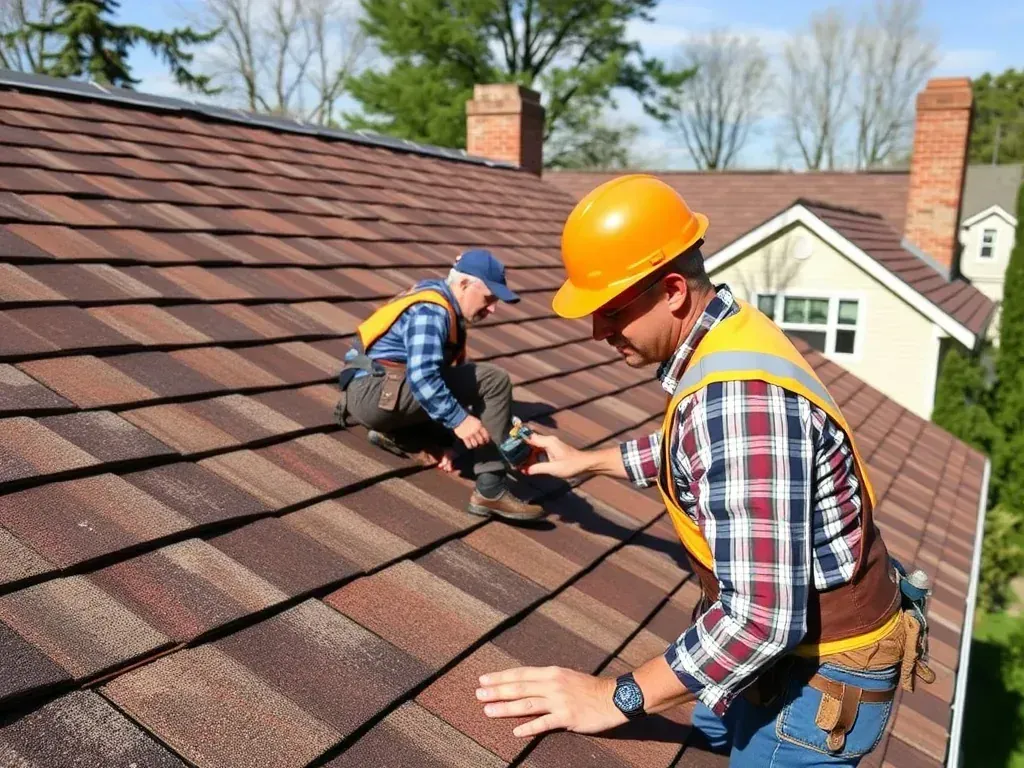
- Shingles get pulled back at the leak so we can see the underlayment and the decking sitting beneath them.
- Flashing gets resealed or replaced — step flashing at sidewalls, chimney flashing, and counterflashing at the top edge.
- Pipe boots and vent boots crack with age, so we swap the rubber collar and re-caulk the base with roof cement.
- Drip edge and ridge cap get checked at the eave and the ridge, where wind and sun do their worst work.
- Valleys collect debris from nearby trees, so we clear them and refit the metal or membrane lining them.
- Decking gets probed for rot; soft plywood or OSB is cut out and sistered to the rafter or truss underneath.
- Sealant and mastic go only where they belong, because caulk is a patch and never a whole system.
- Every job ends with a roof inspection from the attic side, where stains on the sheathing tell the truth.
Local building code sets the minimum for how we refasten a patch. We match fastener length, exposure, and head lap so the repaired area sheds like the field around it.
A repair that skips code fails the next inspection and usually leaks again within a season.
Where Leaks Start on Different Roof Shapes
- On a hip roof, the ridge and the four hips take the most wind uplift, so we check the ridge cap first.
- On a gable roof, the rake and verge edges catch wind, and the gable-end flashing is a common entry point.
- A dormer adds two valleys and a wall intersection, which is why dormer leaks show up so often.
- A chimney is the biggest single leak source — apron flashing, boot flashing, and pipe flashing all matter.
- A skylight fails at the curb, so we check the sealant and the waterproofing around every pane.
Roofing Materials We Repair, and How Each One Fails
Roofing materials fail on their own timelines, and knowing the material tells us what to expect underneath. Here is what we see most across the South Bay.
- Asphalt shingle, including three-tab and the heavier architectural shingle, loses granules first and then curls at the edges.
- Wood shake and cedar shake split along the grain and hold moisture until the underlayment beneath turns soft.
- Slate, clay tile, and concrete tile last for decades, but their fasteners corrode and one cracked tile lets water wick sideways.
- Metal panel, standing-seam panel, and corrugated panel fail at the exposed fastener washers and at every penetration.
- TPO, EPDM, and PVC membrane roofs on flat sections blister, then peel at the seams where the adhesive gave out.
- Built-up roof and modified bitumen surfaces alligator and crack once the asphalt oxidizes past its service life.
- Tar and bitumen patches from older work mask a leak instead of stopping it, so we strip them and start clean.
Synthetic underlayment and an ice-and-water shield at the eave are what we install under a repair. Felt, roofing felt, and tar paper alone will not survive a dry summer followed by heavy rain.
Tile roofs sit on battens and counterbattens, and older homes sometimes carry skip sheathing over purlins instead of solid decking. That changes how we walk it and how we fasten it.
Architectural shingles outsell every other shingle in America for a good reason: they handle sun and wind far better than thin three-tab does.
What Roof Repair Costs in San Jose
Roof repair costs here depend on access, pitch, and how far the water traveled before you noticed it. A single pipe boot swap is a small job; a valley that has leaked into the sheathing for a year is not.
- Access and pitch — a steep gable or a mansard section needs scaffold and a safety harness, which adds labor hours.
- How many layers exist — a second or third layer means a partial tear-off instead of a recover or overlay.
- Decking condition — rot in the plywood, OSB, or sheathing means cutting out and replacing the substrate.
- Material match — matching old three-tab color is harder than matching a current architectural shingle.
- Timing — storm damage repair after a winter rain event books out fast, and emergency roof repair costs more.
We hand over a line-item estimate before we start, with materials and labor listed separately, so you can see what each part of the job costs.
Roof Repair or Roof Replacement — An Honest Read
Roof repair is the right call when damage is isolated and the shingles around it still have life left. Roof replacement makes more sense when failures are scattered, when the roof shows end-of-life wear, or when three repairs in two years have not stopped the water.
- Granule loss across whole slopes means the asphalt is spent, not just worn in one spot.
- A sag or a settle in the roofline suggests the deck, a joist, or a ridge beam has moved.
- If decay has spread through the sheathing in several rooms, patching one square will not fix it.
- Repeated repairs at the same valley or chimney usually point to a design detail, not bad luck.
- A parapet wall with failed coping will keep leaking until the whole edge is rebuilt.
San Jose Weather, Ventilation, and Energy Efficiency
San Jose weather is hard on a rooftop in ways that show up slowly. Dry summers with intense sun and low humidity bake out asphalt and sealant, then winter rain finds every gap.
- Dry summers with minimal rainfall let UV degradation and granule loss build on south and west slopes before anything looks wrong.
- Winter rain storms stress every flashing detail, and ponding water sits on low-slope sections until the drain or scupper clears.
- Low humidity holds moss back, but dust and debris still collect in the valley and behind the chimney.
- Inland temperature swings above 40 degrees a day push metal and sealant to expand and contract until they crack.
- Coastal salt spray corrodes fasteners and flashing, so we specify corrosion-resistant metal where we can.
- Santa Ana wind events lift ridge cap and drip edge, which is why we use ring-shank nails and rated fastening.
- An ice dam at the eave is rare here, but we still check after a cold snap; ice dam removal starts at the valley and the gutter.
A ridge vent paired with soffit vents moves hot air out instead of letting it cook the sheathing from below.
- Insulation at the ceiling line keeps heat in during winter and keeps the roof deck cooler in summer.
- An attic fan helps older homes built without enough intake ventilation at the soffit.
- A reflective roof coating on a flat section lowers surface temperature and buys a membrane a few more years.
- Light-colored or UV-stabilized materials perform better inland, where the sun does the most damage.
- Green roofing and cool-roof options are worth asking about if a roof replacement is already on your list.
Storm Damage, Insurance Claims, and Warranty
Storm damage repair moves faster when the claim is documented properly before anyone touches the roof. We photograph everything, measure it, and write an estimate the adjuster can actually read.
- We meet the adjuster on site for the adjuster inspection so nothing gets missed on the first pass.
- Our insurance scope follows the same line items the carrier uses, which limits back-and-forth.
- If the approved scope misses damaged decking or flashing, we file a supplemental claim with photos.
- We help you complete the proof of loss form and keep track of the claim deadline.
- We note the storm date on every document, because carriers ask for it on weather claims.
Our workmanship warranty is written and covers labor on the repairs we make. Manufacturer coverage on shingles and membranes runs separately, so keep the paperwork.
What a Crew Brings to Your Roofline
A repair on a two-story home is a lot of ladder work, and the tools matter as much as the materials do.
- Scaffold and ladders get set on stable ground, never on a downspout or a loose gutter.
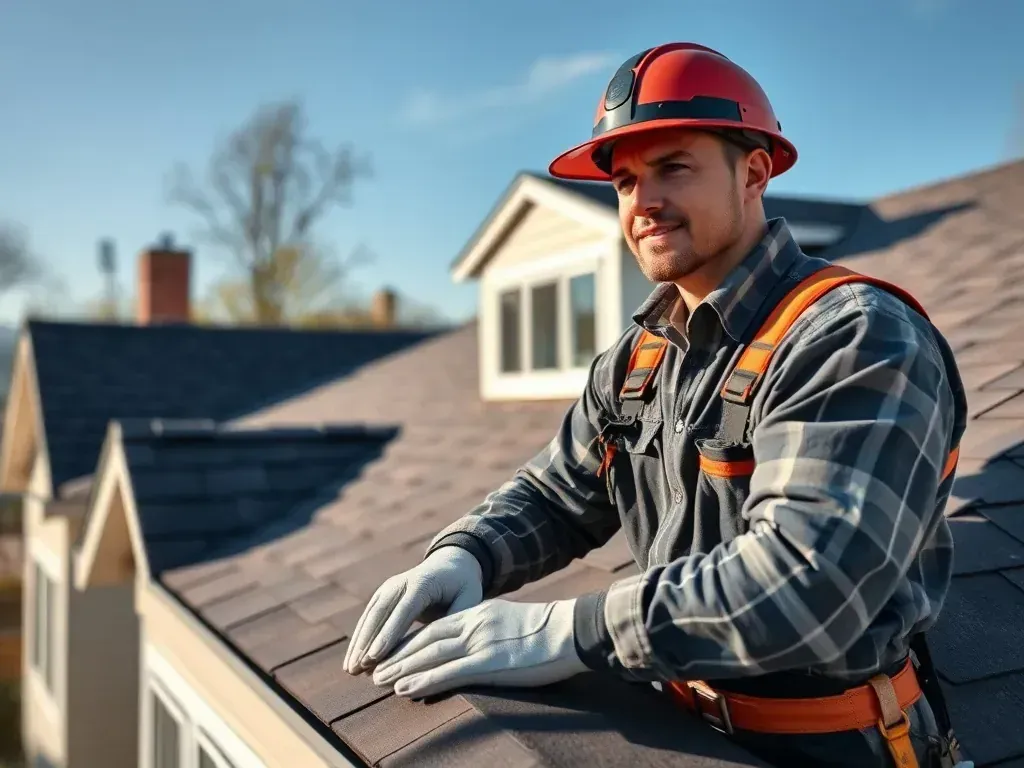
- Every crew member wears a safety harness anchored to a ridge anchor, not to a vent pipe.
- A roofing square, a nail gun, and an air compressor speed up shingle work on larger patches.
- A pry bar and a roofing shovel pull old shingle and nail without tearing the substrate underneath.
- We tarp the area before we open it, and a dumpster catches debris so nails stay out of your grass.
A snow guard is rare here, but we add them on steep slate or metal where sliding ice threatens a walkway. A magnetic sweep closes out every day on site.
How to Choose a Roofing Contractor in San Jose
If you are comparing roofers near you, look for a licensed and insured roofing contractor with a written estimate and a local phone number.
- Ask for the roof estimate in writing, with materials, labor, and cleanup listed separately.
- Ask whether the permit gets pulled, since building code requires one for most structural repairs here.
- Ask what the workmanship warranty covers and how long it runs on labor.
- Ask who does the work — some businesses contractors subcontract the entire job out.
- Ask for photos of the damage before and after, taken from the same angle.
- Local expertise matters: a roofer who knows this climate knows which details fail here first.
We handle residential roofing and small commercial roofing, along with gutter services, roof inspection, and roof replacement when a repair no longer makes sense. Customer satisfaction comes down to one thing — whether the leak stays fixed after the next storm.
What's Included
- A full roof inspection of the leak area, plus an attic check for stains on the sheathing and rafters.
- Replacement of damaged shingles, underlayment, and any wet or rotted decking we find underneath.
- New step flashing, chimney flashing, and counterflashing sealed with roof cement and mastic where appropriate.
- New pipe boots and vent boots on every cracked collar we open, along with fresh sealant at the base.
- Resealed drip edge, ridge cap, and valley metal, with ring-shank nails rated for wind uplift.
- Site protection with tarps, a dumpster for debris, and a magnetic sweep for nails before we leave.
- A written workmanship warranty on our labor, with manufacturer coverage documented on the materials.
- Photo documentation of the damage and the finished repair, plus help with insurance claim paperwork.
Our Roof Repair Process
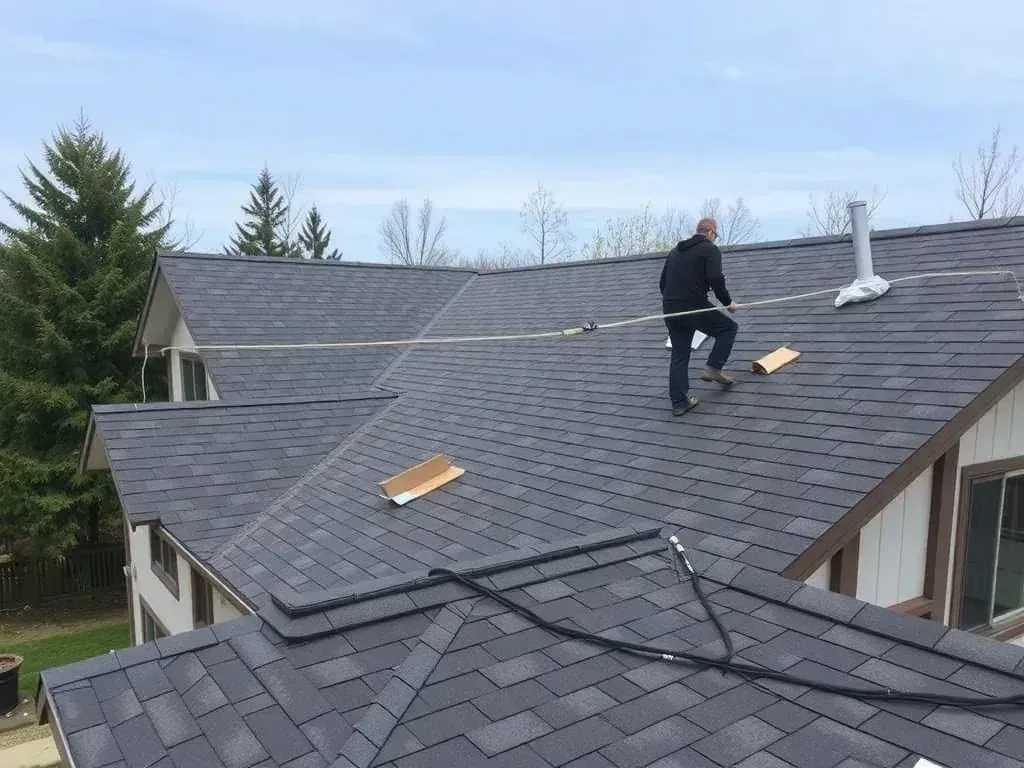
- Inspect and diagnose. We walk the rooftop, check the attic side, and probe the decking to find the actual entry point rather than the ceiling stain.
- Write the line-item estimate. You get materials, labor, and cleanup priced separately, along with our honest read on repair versus roof replacement.
- Set up and protect. We stage scaffold or ladders, tarp the area below, drop a dumpster for debris, and confirm any permit the building code requires.
- Open and repair. We pull shingles, cut out rot, refit underlayment and flashing, and fasten new material with matched nails and screws.
- Inspect and clean. A second roof inspection from the attic confirms the fix, then we sweep for nails and haul the debris away.
Signs You Need Roof Repair
Signs You Need Roof Repair in San Jose
- Curled, missing, or deteriorating shingles show up first on south and west slopes, where granule loss is heaviest.
- Water stains and discoloration on attic framing or ceiling drywall usually mean the leak started months ago.
- Interior ceiling leaks during or after heavy rain events point to flashing or a valley rather than the field.
- Rusty or deteriorated metal flashing around vents and penetrations means the sealant has already failed.
- Stains on the fascia, or a soft soffit, tell you water has been running behind the gutter for a while.
- Granules piling up at the bottom of a downspout are a slow signal that the asphalt is at end-of-life wear.
- A sag along the roofline or a soft spot underfoot suggests a rafter, joist, or truss has settled.
- Daylight or damp air in the attic after a long dry summer usually means an ice-and-water shield gap or a vent boot crack.
Don't just take our word for it — hear from our satisfied customers.
"We had a stain spreading on the ceiling in Willow Glen and figured the whole roof was done. Their crew traced it to a cracked pipe boot and a pulled step flashing, replaced both, and walked me through the attic photos before they left. Half a day, no tear-off."
Maria R., Willow Glen
"The valley over our kitchen leaked every winter storm in Almaden Valley. They cleared the debris, refit the valley metal, and re-set the clay tile instead of pushing a full replacement. Licensed, insured, and they pulled the permit."
Dave T., Almaden Valley
"Wind lifted the ridge cap and drip edge along our roofline near Downtown San Jose. They replaced the ridge cap, re-nailed with ring-shank nails, and resealed the counterflashing at the chimney. Two days from my first call to cleaned up."
Priya S., Downtown San Jose
Ready to get started? Call us today at 5103278325 for a free estimate.
Free estimates · Licensed & Insured certified · up to 50-year warranty
Call 5103278325